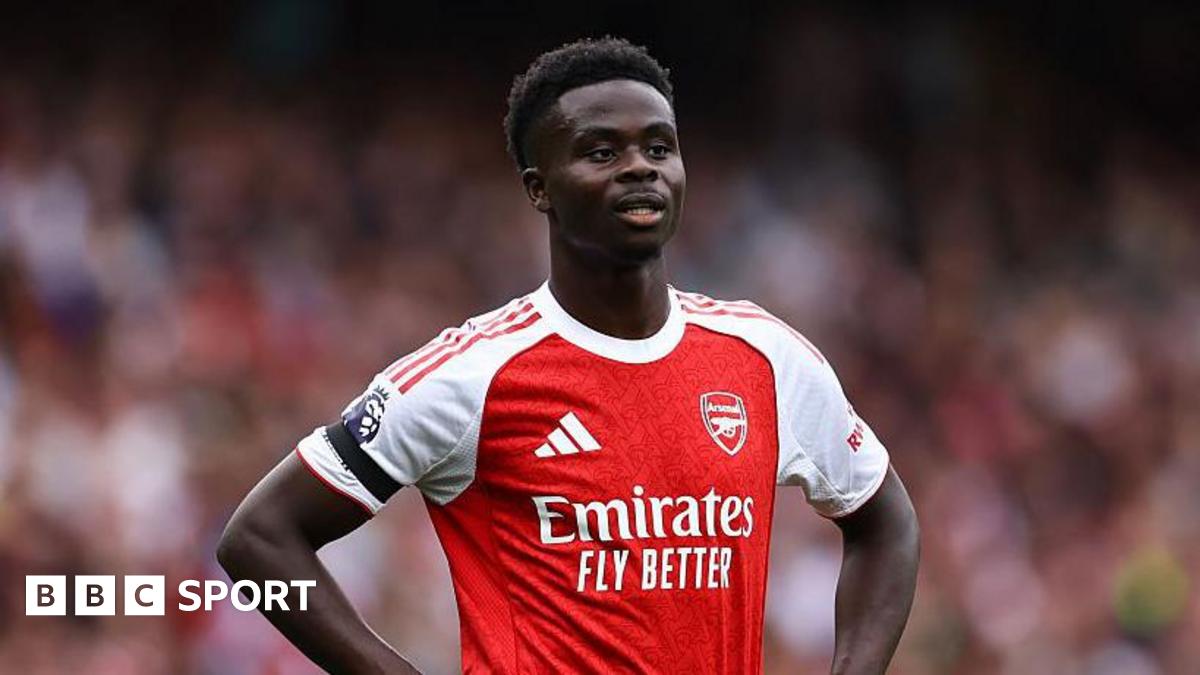
Bukayo Saka's projected four-week absence due to a hamstring injury arrives at a critical juncture for Arsenal, raising questions about their attacking efficacy and tactical flexibility. While the immediate concern is the Liverpool match and England's World Cup qualifiers, a deeper analysis reveals potential ramifications for Arsenal's overall season trajectory. The acquisition of Viktor Gyokeres, Noni Madueke and Eberechi Eze this summer was intended to provide depth, but how do these players statistically measure up against Saka's consistent output, and what tactical shifts might manager Mikel Arteta employ to mitigate the impact?
Saka's influence extends beyond mere goal contributions. His expected threat (xT), a metric quantifying the probability of a possession resulting in a goal, consistently ranks high within the Arsenal squad. This highlights his capability to not only score but also to create scoring opportunities for teammates. The question now is whether the newly acquired attacking talents can replicate this dual threat. Initial data suggests Gyokeres excels in direct goal-scoring situations, Madueke offers significant dribbling prowess, but Eze brings in playmaking ability. Their challenge lies in seamlessly integrating into Arsenal's established attacking patterns and replicating Saka's overall contribution.
The turning point in addressing Saka's absence hinges on Arteta's tactical adjustments. A like-for-like replacement might not be the optimal solution. Instead, a shift in formation or emphasis on different attacking areas could prove more effective. For instance, deploying a more central attacking midfielder, allowing Martin Odegaard (assuming his shoulder injury isn't severe) greater freedom to dictate play, could compensate for Saka's absence on the wing. Alternatively, a more direct approach, utilizing the pace of Madueke to exploit defensive vulnerabilities, could offer a different dimension to Arsenal's attack.
Examining Arsenal's performance data from last season, a clear pattern emerges: their win percentage dips noticeably in matches where Saka's influence is limited, either through injury or strategic rotation. This underscores the team's reliance on his dynamic presence and the challenge in finding a suitable alternative. The arrival of Gyokeres, Madueke, and Eze aims to address this vulnerability, providing Arteta with more options to navigate such situations. However, the real test lies in their ability to consistently deliver under pressure, particularly in high-stakes encounters like the upcoming match against Liverpool.
The next four weeks will serve as a crucial experiment for Arsenal. Will the new attacking options rise to the occasion, proving their worth as capable replacements for Saka? Or will Arsenal's attacking potency diminish, exposing their over-reliance on a single player? The data, both past and future, will undoubtedly provide a clearer picture of Arsenal's attacking resilience and Arteta's tactical adaptability in the face of adversity. The question remains: can Arsenal navigate this period successfully and emerge stronger, or will Saka's absence derail their momentum?