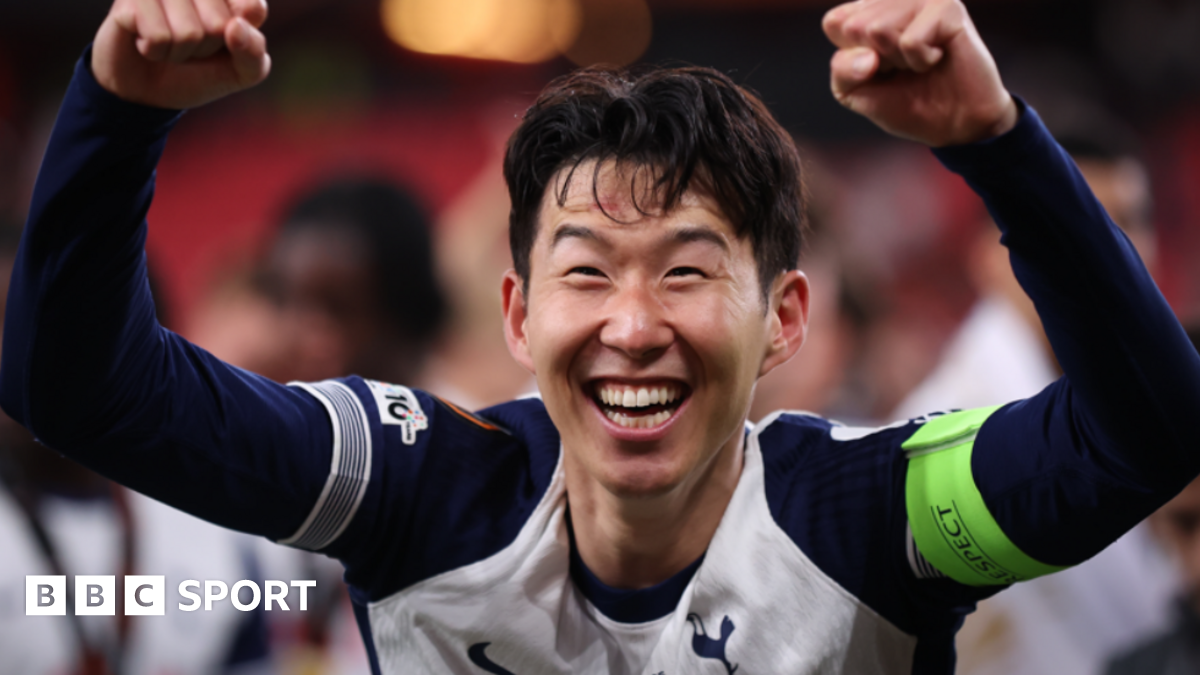
The departure of Son Heung-min from Tottenham Hotspur after a decade marks more than just the exit of a popular figure. Data suggests a significant void, both on and off the pitch, that Spurs must address. Let's dive into it.
Statistically, Son's contributions were substantial. 173 goals in 454 appearances translate to a goal contribution every 2.6 games. Comparing this to other Premier League forwards over the last decade, it places him in an elite bracket. More recently, while his 2024-25 season saw a dip to 7 goals in 30 appearances, his 2023-24 performance (17 goals, 10 assists) demonstrates his potential for high output. Losing that potential, regardless of recent form, creates a pressure point.
Moreover, consider the commercial impact. The article states that up to 700 Son shirts are sold on matchdays, driven by a large South Korean fanbase. Football finance expert Kieran Maguire notes this could have a "small" impact on Tottenham's finances. Small, perhaps, relative to Premier League prize money, but not insignificant. Shirt sales are a tangible revenue stream, and Son's popularity in South Korea, where Spurs are supported by 12 million people, amplified that revenue.
Clubs that have lost talismanic forwards often experience a dip in performance, at least initially. When Cristiano Ronaldo left Real Madrid in 2018, the team struggled to maintain their attacking output, despite having other talented players. Similarly, Barcelona's struggles after Lionel Messi's departure are well-documented. While Spurs aren't directly comparable in terms of global stature, the principle remains: replacing a player with significant goal-scoring ability and commercial appeal is challenging.
Tactically, Son offered versatility. He could play as a winger or a center-forward, providing flexibility to different formations. Under managers like Mauricio Pochettino, Son thrived in a high-pressing, counter-attacking system. More recently, he adapted to Ange Postecoglou's attacking philosophy. Replacing this adaptability requires a player with a similar skillset or a fundamental shift in tactical approach. That means increased pressure on squad composition.
The transfer market context is also relevant. Finding a like-for-like replacement for Son will be expensive. Given his age (33), a direct replacement would likely command a significant transfer fee and wages. Spurs may opt for a younger player with potential, but that carries its own risks. Consider the cases of clubs like Liverpool, who invested heavily in Darwin Nunez to replace Sadio Mane. These are expensive gambles that place immediate pressure to deliver results.
Son's departure leaves a multifaceted void. The data points to a decline in goals, assists, marketing impact, and even tactical flexibility. How Spurs choose to address these challenges will define their success in the coming seasons. Will they invest in a direct replacement, or will they adopt a new strategy to compensate for his absence?